
Monday, June 4, 2012
Summer Reading
Sea Raven has two e-books available from Amazon.com for your summer beach commute.
The first is a short, fast-paced, political intrigue: “Washington Legal: What Secretaries Know and When They Know It.” Behind the scenes in a Washington, D.C. law firm at the turn of the 21st Century, an unconventional Human Resources Director protects her secretarial staff from dysfunctional bosses, rolls with the punches of outsourcing and evolving digital technology, and uncovers a pre-9/11 international deal that leads to murder. Yours for just 99 cents on your Kindle
The second is“The J’Argon,” a full-length, future-fiction fantasy published in 2000 by iUniverse.com, now also available as an e-Book from Amazon. The J’Argon is the leader of a spiritual alliance that has voice but not vote in 22nd century global politics. She is the Fourth J’Argon and the first woman to hold the title since the Covenant of the Word was formed in 2047. Her long-time lover, partner, and soul friend, the Arch Deacon of the National Cathedral in Washington, D.C. is a leader in the liberation underground. The Year is 2157. The United States has become a repressive theocracy, where a great evil holds sway. The Arch Deacon must open his prophetic Christian mysticism to the J’Argon’s ancient earth-based magic and awaken his own adept power so that together they can defeat the Dragon.
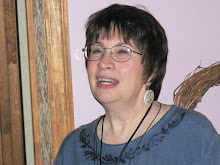
After 25 years as a legal secretary in Washington, D.C., Sea Raven moved to the Eastern Panhandle of West Virginia in 2002. She is now a volunteer chaplain with Hospice of the Panhandle in Martinsburg. Her work as a free-lance writer, musician, and worship leader is grounded in post-modern Christian scholarship, and focused on justice, peace, and the integrity of creation. Sea Raven holds a Doctor of Ministry in Creation Spirituality. Her doctoral project, The Wheel of the Year: A Worship Book for Creation Spirituality, provides worship experiences that spring from pre-Christian Celtic spirituality, post-modern cosmology, and the theology and four-path principles of Creation Spirituality as developed by Rev. Dr. Matthew Fox. The project is published on her website along with a weekly blog (the original Liberal Christian Commentary).
Sea Raven is an Associate of Westar (the Jesus Seminar); a board certified Associate Clinical Chaplain (College for Pastoral Supervision and Psychotherapy); and a designated Lay Minister of the Unitarian Universalist Congregation of Frederick, Maryland.

Tuesday, April 3, 2012
David Brooks Respects the Future and Misses the Point
In response to the Snelling family tragedy, David Brooks writes,
Brooks declines to present the religious arguments against murder and suicide, “many of which are based on the supposition that a life is a gift from God.” But larger theological minds than Mr. Brooks’ have gone far beyond such simplistic pietisms and wrestled with the “courage to be” – to live fully and completely in the face of the knowledge that one day we will cease to exist. Mr. Snelling stands accused by Brooks of either a profound and callous self-centeredness, or romantic delusion. But neither may have been the case. Instead, in the face of the failure of both society and the religions that claim to nurture and guide it, Mr. Snelling looked into the possibility of non-existence and chose it.
That choice shows a trust in the nature of life and the universe that is close to the trust that Jesus taught and embodied. Progressive, liberal religious people – Christians particularly – should look to Jesus’ relationship to God beginning with Matthew 6:25-34. Jesus says, “don’t fret about your life . . . there’s more to living than food and clothing . . . Take a look at the birds of the sky . . . the wild lilies . . . the grass in the field, which is here today and is thrown into an oven tomorrow.” Go on from there to John 14:1-4, followed by Paul’s first letter to the Corinthians, 15:51-52. Read these passages in the context of today’s cosmology – what we now know about the nature of the Universe, including the laws of physics, not the 1st century cosmology of a triple-decker universe with God above, earth in the middle, and hell below that conventional religion insists upon to its continued irrelevance.
Jesus taught a seamless relationship among the spirit of life, the natural world, and humanity, and he trusted that relationship to the point of his own unjust death at the hands of Roman occupiers. Paul writes, in the new translation by the Westar institute scholars:
In this Holy Week that celebrates the liberation of Passover and the incarnate promise of Easter, instead of concluding that Mr. Snelling “either lost control of his faculties, or made a lamentable mistake,” progressive spiritual leaders should grant him the courage to look into nothingness and encounter life itself.
Either Snelling . . . lost control of his faculties, or he made a lamentable mistake. . . Our job is not to determine who is worthy of life, but how to make the most of the life we have been given. . . . But who is to say how Snelling would have felt four months from now? The fact is, we are all terrible at imagining how we will feel in the future. . . our capacities for imagining the future are . . . horrible in moments of stress and suffering. Given these weaknesses, it seems wrong to make a decision that will foreclose future thinking. It’s better to respect the future, to remain humbly open to your own unfolding. . . .If you look at life through the calculus of autonomy, then maybe Snelling made the right call. . . . But if you look at a life as one element within a mysterious flow, . . . Charles and Adrienne Snelling still had a few ripples to create.In present-day U.S. realities, there is no return from Alzheimer's; after age 80 the outlook for an autonomous, productive, and meaningful life in the absence of some form of dementia is bleak at best, even for those with the means to pay for long-term, humane, enlightened, assistance. To suggest that anyone in the circumstances faced by the Snellings had “a few ripples to create” in the “mysterious flow” of life, is naive at best, cruel at worst.
Brooks declines to present the religious arguments against murder and suicide, “many of which are based on the supposition that a life is a gift from God.” But larger theological minds than Mr. Brooks’ have gone far beyond such simplistic pietisms and wrestled with the “courage to be” – to live fully and completely in the face of the knowledge that one day we will cease to exist. Mr. Snelling stands accused by Brooks of either a profound and callous self-centeredness, or romantic delusion. But neither may have been the case. Instead, in the face of the failure of both society and the religions that claim to nurture and guide it, Mr. Snelling looked into the possibility of non-existence and chose it.
That choice shows a trust in the nature of life and the universe that is close to the trust that Jesus taught and embodied. Progressive, liberal religious people – Christians particularly – should look to Jesus’ relationship to God beginning with Matthew 6:25-34. Jesus says, “don’t fret about your life . . . there’s more to living than food and clothing . . . Take a look at the birds of the sky . . . the wild lilies . . . the grass in the field, which is here today and is thrown into an oven tomorrow.” Go on from there to John 14:1-4, followed by Paul’s first letter to the Corinthians, 15:51-52. Read these passages in the context of today’s cosmology – what we now know about the nature of the Universe, including the laws of physics, not the 1st century cosmology of a triple-decker universe with God above, earth in the middle, and hell below that conventional religion insists upon to its continued irrelevance.
Jesus taught a seamless relationship among the spirit of life, the natural world, and humanity, and he trusted that relationship to the point of his own unjust death at the hands of Roman occupiers. Paul writes, in the new translation by the Westar institute scholars:
I am going to tell you a wondrous secret: We are not all going to die, rather we are all going to be transformed, in an instant, in the blink of an eye at the sound of the last trumpet-signal. The trumpet will sound and the dead will be raised incorruptible and we [too] will be transformed. Because this perishable man must be clothed with the imperishable, and this mortal man must be clothed with immortality. And when the perishable is clothed with the imperishable and the mortal is clothed with immortality, then the saying that is written will come true: Death has been engulfed by victory. Where, O Death has your victory gone? What’s happened, O Death, to your fatal sting?21st century cosmology is clear: neither matter nor energy can be created or destroyed, but only transformed. We should have the same confidence in God that Jesus did: the same confidence in justice-compassion, in the spirit of life, and the nature of the universe itself.
In this Holy Week that celebrates the liberation of Passover and the incarnate promise of Easter, instead of concluding that Mr. Snelling “either lost control of his faculties, or made a lamentable mistake,” progressive spiritual leaders should grant him the courage to look into nothingness and encounter life itself.
Saturday, March 31, 2012
Love and Death
In today’s New York Times Susan Jacoby writes,
As the aging baby boom generation places unprecedented demands on the health care system, there is little ordinary citizens can do — witness the tortuous arguments in the Supreme Court this week over the constitutionality of the Affordable Care Act — to influence either the cost or the quality of the treatment they receive. However, end-of-life planning is one of the few actions within the power of individuals who wish to help themselves and their society. Too few Americans are shouldering this responsibility.The editors could not possibly have anticipated that news of the deaths of Charles Darwin Snelling (brother of the governor of Pennsylvania) and his wife Adrienne would appear to be an accompaniment to Ms. Jacoby’s important and timely opinion piece. Some reports have named the deaths a “murder-suicide”; and, in truth, culturally, we have no other words to use. The Times did find a way to be more gentle:
On Thursday, months after contributing a poignant essay to The New York Times about navigating a six-decade marriage upended by his spouse’s Alzheimer’s disease, Mr. Snelling killed his wife and himself, the Snelling family said in a statement released to The Morning Call of Allentown, Pa.. They were found Thursday in their home in Lehigh County in eastern Pennsylvania, the police said. Mr. Snelling shot himself, the coroner said. The ruling on Ms. Snelling’s death was pending. Both were 81.Does “taking responsibility for death” include killing your loved one and then committing suicide? Ms. Jacoby does not answer that question; but she does have a provocative conclusion that points toward “yes”:
There is a clear contradiction between the value that American society places on personal choice and Americans’ reluctance to make their own decisions, insofar as possible, about the care they will receive as death nears. Obviously, no one likes to think about sickness and death. But the politicization of end-of-life planning and its entwinement with religion-based culture wars provide extra, irrational obstacles to thinking ahead when it matters most.The Snelling family tragedy is the most recent publicized incident of murder-suicide among the elderly, and speculation about what might have led to it must not be taken personally. The Times presented a love story, and that is the way this particular one should remain. But because this kind of end-of-life experience is not uncommon, we can ask questions on behalf of others caught in the same situation. Did he know that she did not want to continue the long day’s journey into night that is Alzheimer’s? Did he then know he could not live without her? Or was he forced to sacrifice himself to the near-sighted gods of retributive justice – both secular and religious?
He was likely looking at the death penalty if convicted of murder in Pennsylvania. According to his essay published by The Times in December 2011, families on both sides were a combination of New England Congregationalists and Quakers – so a liberal view of life, liberty, and the pursuit of happiness might be assumed. Certainly it is no accident that his name was Charles Darwin Snelling. At 81, with his own death far more visible in the road ahead than at any other time in his life, traditional Catholic or protestant views about sin and the sanctity of life may not have been particularly relevant. But he was a leader in the Pennsylvania Republican party, and his brother is the governor of the State. Perhaps that “politicization” of end-of-life issues, and their “entwinement with religion-based culture wars” called out by Susan Jacoby left him no choice.
In the Christian liturgical year, we are on the cusp of Easter. This Sunday is Palm Sunday, which in Mark’s gospel ushers in “Holy Week,” the final week of Jesus’ life. During that week, Jesus orchestrated two demonstrations on behalf of distributive justice-compassion, and in opposition to those near-sighted gods of retributive justice worshiped by both religion and politics. The first – in stark contrast to the imperial “motorcade” led by Pontius Pilate – was the legendary rag-tag procession led by an improbable messiah, riding on a donkey. The second was the deliberate disruption of Temple business. The religious authorities were collaborators with the unjust policies of the imperial occupation. When the Romans built the Court of the Gentiles in the Jewish Temple, and even allowed the Roman golden eagle to be mounted on the gate, it was clear to many that the religious leadership had sold out. That’s why Jesus yells, “This house was to be a house of prayer for all people, but you have turned it into a hide-out for robbers!”
It is time for progressive-liberal spiritual leaders of all faiths to overturn the money-changers and political collaborators and stand for justice-compassion. Engage the questions of life and death without weighing the political advantage. Have the courage – the confidence in whatever god or spiritual universe – to create a secular humanity that loves and cares for itself. Mr. Snelling defined his care-giving as “redemption”:
So, here comes the redemption. It never occurred to me for a moment that it would not be my duty and my pleasure to take care of my sweetie. After all, she took care of me in every possible way she could for 55 years. The last six years have been my turn, and certainly I have had the best of the bargain.This is the kind of choice dictated by love that can indeed redeem individual lives. But so long as our society is immobilized by the collaboration of political systems with religious beliefs that force people into conundrums that leave no choice, there can be no redemption. That’s why Jesus was executed by the Romans. Whether the spirit of justice-compassion rises incarnate is up to us.
Monday, February 27, 2012
English as Official Language: Dog Whistle to Intolerance
On Tuesday February 21, Frederick County Maryland became the first in the State to make English the official language. Some folks fall into the trap of believing that making English official will force more people to learn it, and they will therefore be better integrated into the dominant society.
As columnist Petula Dvorak pointed out in a Washngton Post/Post Local column, it is true that learning English leads to better wages, better opportunity, and better education. But when Board Vice President Paul Smith says “a common language will build unity in the county and improve county efficiency,” what he really means is what Board President Blain Young made very clear: “I think this measure preserves and enhances the quality of life for Frederick County citizens.” There’s the dog whistle: As the Huffington Post reports, 19 people addressed the commissioners on the measure during the meeting, but only two spoke in favor of the English-only plan, which the board president, Blaine Young, said would “deter illegal immigration.”
Members of the Unitarian Universalist Congregation of Frederick Maryland are organizing a protest. An email to the Board of Trustees and congregational leaders said: “We believe our congregation needs to publicaly oppose this action and to do so immediately. The law violates our principles by attempting to marginalize a whole group of people. Since immigration is the theme of the upcoming UUA General Assembly it seems particularly timely that we should take a stand on an immigration issue that is unfolding in our own front yard. . . .”
The first of seven Unitarian Universalist principles is is to “affirm and promote the inherent worth and dignity of every person.” There is no accompanying plan in the Frederick County action for providing English Second Language classes or any other assistance to Hispanic immigrants, regardless of their legal status. In fact, as WTOP reported early Wednesday morning, part of the reason for taking this action is to assure that no taxpayer money will be spent on language accessibility, other than health and safety, and [of course] tourism and trade.
The second Unitarian Universalist principle is “Justice, equity and compassion in human relations,” not “enhancing the quality of life for . . . citizens.”
Friday, February 24, 2012
Whose Religious Freedom?
Zealots seldom can see outside the boxes they live in. Virginia Republicans are now expressing distrust of Governor McDonnell because he 1) backed off the infamous “vaginal probe” prerequisite for women who need abortions; and 2) sent the “personhood” bill back to committee until after the election. Right-wing Christian fundamentalists and Catholic Bishops are feeling oppressed because the Obama Administration has ruled that Catholic universities and hospitals that employ and serve non-Catholic (even non-Christian) people must require their insurance providers to cover birth control for their employees at no extra cost. Rick Santorum, the current darling of the dissatisfied GOP, is convinced that religious freedom is under attack. He says, regarding “the freedom to believe what you want to believe and practice that belief. . . . they don’t talk about “freedom of religion, they talk about freedom of worship. . . . leaders of this country are narrowing the view of what freedom of religion is all about. . . .” Once you walk out the door, Santorum says, the government controls what you can think, say, and do.
Because the conventional wisdom is that Santorum is completely unelectable, some Democrats are suggesting that in states with open primaries, progressives should vote for Santorum. As the contemporary proverb says, “be careful what you wish/pray for.”
Too often extremists are considered to be crazy, or “unelectable.” Current polls indicate that a mentality of “a pox on all their houses” is beginning to make itself felt in the country. President Obama is apparently in a dead heat with Romney and Santorum; at the same time, “[t]here is undeniable dissatisfaction with the field. A 55% majority of Republicans say they wish someone else was running; 44% say they’re pleased with the selection of candidates” (Daily Kos February 21, 2012).
Numbers like that mean that quite a few folks might be staying home on November 6. Some might think this is a good thing for President Obama’s prospects. But when reasonable people stay home, the fringes win. Rather than rolling our collective eyes, religious progressives need to start talking about OUR religious liberty. As Barry Goldwater famously proclaimed in 1964, “You can’t legislate morality.” But he also said, “Extremism in defense of liberty is no vice.”
Not only do religious progressives (formerly known as “liberals”) need to speak up for our religious principles; atheists, humanists, and those who define themselves as “spiritual but not religious” must stand up for ethics and morality. As recent humanist slogans have proclaimed, you don’t need God to love. You don’t need God to claim protection under the first amendment.
On Thursday, February 23, the West Virginia legislature passed the Religious Freedom Restoration Act. On its face the Act seems benign. The Elizabethton Star reports:
CHARLESTON, W.Va. (AP) — West Virginia’s childhood immunization requirements would not be affected by pending legislation addressing religious freedoms. House Judiciary Chairman Tim Miley made that point before delegates passed the bill 92-2 to the Senate on Thursday. The bill responds to a 1990 U.S. Supreme Court opinion upholding state laws that unintentionally affect religious practices. Delegate Larry Kump called the measure necessary. The Berkeley County Republican described how fellow Mormons were driven out of other states in the 19th century. The bill applies to government. It would affirm that people could argue in court that their free exercise of religion has been substantially burdened. The government would have to show it’s furthering a compelling interest in the least restrictive way. The bill would not prevent government from maintaining health, safety, security or discipline.But next on the Republican agenda in West Virginia is “personhood” legislation, mandating that a fertilized egg is a human being with all the rights, responsibilities, and protections of adults. Without a clear push-back from religious progressives and humanitarian ethicists, basic human rights will be up for grabs. The fact that Mississippi voters rejected this is no reason to assume it’s so crazy it could never become established law.
As one of the Tea Party’s favorite founders is reputed to have said,“Eternal vigilance is the price of liberty” – Thomas Jefferson.
Friday, February 17, 2012
Two Adams: An Answer to Brooks’ “Jeremy Lin Problem”
1 Corinthians 15:42-57;Philippians 2:1-11
In a provocative essay in today’s New York Times, David Brooks raises a spiritual dilemma. He proposes that humanity lives in a tension between two moral universes. One is a “sporting ethos,” which pervades and defines all areas of competition. The “primary virtue is courage – the ability to withstand pain, remain calm under pressure and rise from nowhere to topple the greats.” The second universe is the spiritual/religious morality that demands self-sacrifice: the last shall be first; the suffering servant is the savior; the weak and disenfranchised embody the most powerful force for change.
Brooks refers to Jewish theologian Joseph Soloveitchik, who “argues that people have two natures. . . ‘Adam the First,’ the part of us that creates, discovers, competes and is involved in building the world. . . . [and] ‘Adam the Second,’ the spiritual individual who is awed and humbled by the universe as a spectator and a worshipper.” Brooks suggests that the anger people feel when either sports or politics mix with religion rises because we are uncomfortable with both the experience of invincible physical power, and the experience of transcendent self denial. The anger arises, Brooks says, because “people . . . want to deny that this contradiction exists . . . and live in a world in which there is only one morality, one set of qualities and where everything is easy, untragic and clean.”
If he had ended the piece there, he would have deserved an A+. Instead he dilutes his challenge with a cop-out: “life and religion are more complicated than that.”
In the Apostle Paul’s 1st letter to the Corinthians, chapter 15, Paul lays out a theology that for centuries has made seminarians’ heads swim, and lay-folk nod off in the pews. Now comes a new translation by Westar Institute Scholars Arthur J. Dewey, Roy W. Hoover, Lane C. McGaughy, and Daryl D. Schmidt: The Authentic Letters of Paul: A new reading of Paul’s rhetoric and meaning (Polebridge Press, 2010). This translation pulls Paul’s theology down from the mind-numbing theological stratosphere into the here and now – which according to the scholars was where Paul was in the 1st century – here and now (in his own time and place.) So when Paul gets going about “sin” and the “perishable” inheriting the “imperishable” he is not talking about going to heaven when we die if and only if we’ve been believers in Jesus’ “resurrection.” He is talking about the “corrupting seduction of power” [hamartia for any Greeks reading this]. For Paul, this force is so strong that it becomes personified. Think about how power corrupts, and absolute power corrupts absolutely. That begins to get at what Paul was referring to.
He wasn’t talking about the physical decomposition of human bodies after death, that will magically take on new “spiritual” bodies in heaven. In 1 Cor. 15:45, he was talking about that same first Adam that Brooks does in his essay when he quotes Joseph Soloveitchik: “the part of us that creates, discovers, competes and is involved in building the world.” The second Adam, according to the Scholars Version, “became a life-creating power . . . the body fit for life in God’s new world.” The difference is that for Paul, that second Adam (which was Jesus, the Anointed One) is a prototype for how to bring about God’s rule on the planet. For Paul, it is not enough to be “the spiritual individual who is awed and humbled by the universe as a spectator and a worshipper,” as Brooks (and Soloveitchik) describes the second Adam. Paul’s second Adam is an activist who accepts that the way to overturn the inevitable injustices that come from the seductive power of corruption is to radically abandon self-interest.
For Christians, Jesus was the person who managed to contain the supposedly conflicting paradigms of 1st Adam (warrior, athlete, competitor, entrepreneur) and 2nd Adam (self-sacrificing servant, pacifist, humanitarian). In his letter to the Philippians, Paul says, “I appeal to all of you to think in the same way that the Anointed Jesus did, who although he was born in the image of God, did not regard ‘being like God’ as something to use for his own advantage, but rid himself of such vain pretension and accepted a servant’s lot.” Jesus was willing to go all the way to death at the hands of the representatives of the “first Adam,” who constructed the systems of Empire, and fell prey to the seductions of earthly power. That is why – in 1st century Paul’s cosmology – “God raised him higher than anyone and awarded him the title that is above all others. . . Jesus the Anointed is lord. . . .” small “l” – not a titan of Wall Street, not the Hollywood star, and not the emperor of the known universe. An executed criminal is the model for how to save humanity from itself.
This is what is so annoying – even enraging – about combining politics or sports or business with religious or spiritual conviction. That second Adam insists on distributive justice-compassion for the universe s/he holds in awe and wonder. The problem is that for the work to be legitimate requires a radical abandonment of self-interest. Like Mr. Lin, most of us have a hard time getting past that old devil hamartia.
Thursday, February 16, 2012
Heartland: Ignorance is Bliss
The next great fight in our public schools will likely be over whether climate change is related to human activity. The New York Times reports that documents leaked from the supposedly non-profit libertarian think-tank Heartland “suggest that Heartland has spent several million dollars in the past five years in its efforts to undermine climate science, much of that coming from a person referred to repeatedly in the documents as “the Anonymous Donor.” A guessing game erupted Wednesday about who that might be.”
The scandal is not that Heartland holds anti-scientific, libertarian views. The scandal is that in order to be a “non-profit,” an organization may not accept money in order to influence politics:
These people are not denying the science; they are terrified of the change in paradigm that will happen if human life on the Planet is going to survive in any recognizable form. Team that likelihood with Christian fundamentalism, and we have the perfect storm. Christian fundamentalists are more interested in Biblical inerrantcy and literalism than post-modern, 21st century cosmology. After all, the sooner “the Rapture” comes, the better.
The scandal is not that Heartland holds anti-scientific, libertarian views. The scandal is that in order to be a “non-profit,” an organization may not accept money in order to influence politics:
The documents raise questions about whether the group has undertaken partisan political activities, a potential violation of federal tax law governing nonprofit groups. For instance, the documents outline “Operation Angry Badger,” a plan to spend $612,000 to influence the outcome of recall elections and related fights this year in Wisconsin over the role of public-sector unions.In The Nation November 28, 2011, Naomi Klein reviewed Heartland’s Sixth International Conference on Climate Change. The threat that climate change (aka “global warming”) presents to big business is the belief (fear) “that climate change is a Trojan horse designed to abolish capitalism and replace it with some kind of eco-socialism. As conference speaker Larry Bell succinctly puts it in his new book ‘Climate of Corruption,’ climate change ‘has little to do with the state of the environment and much to do with shackling capitalism and transforming the American way of life in the interests of global wealth redistribution.’”
Tax lawyers said Wednesday that tax-exempt groups were allowed to undertake some types of lobbying and political education, but that because they are subsidized by taxpayers, they are prohibited from direct involvement in political campaigns.
These people are not denying the science; they are terrified of the change in paradigm that will happen if human life on the Planet is going to survive in any recognizable form. Team that likelihood with Christian fundamentalism, and we have the perfect storm. Christian fundamentalists are more interested in Biblical inerrantcy and literalism than post-modern, 21st century cosmology. After all, the sooner “the Rapture” comes, the better.
Subscribe to:
Posts (Atom)